![]()
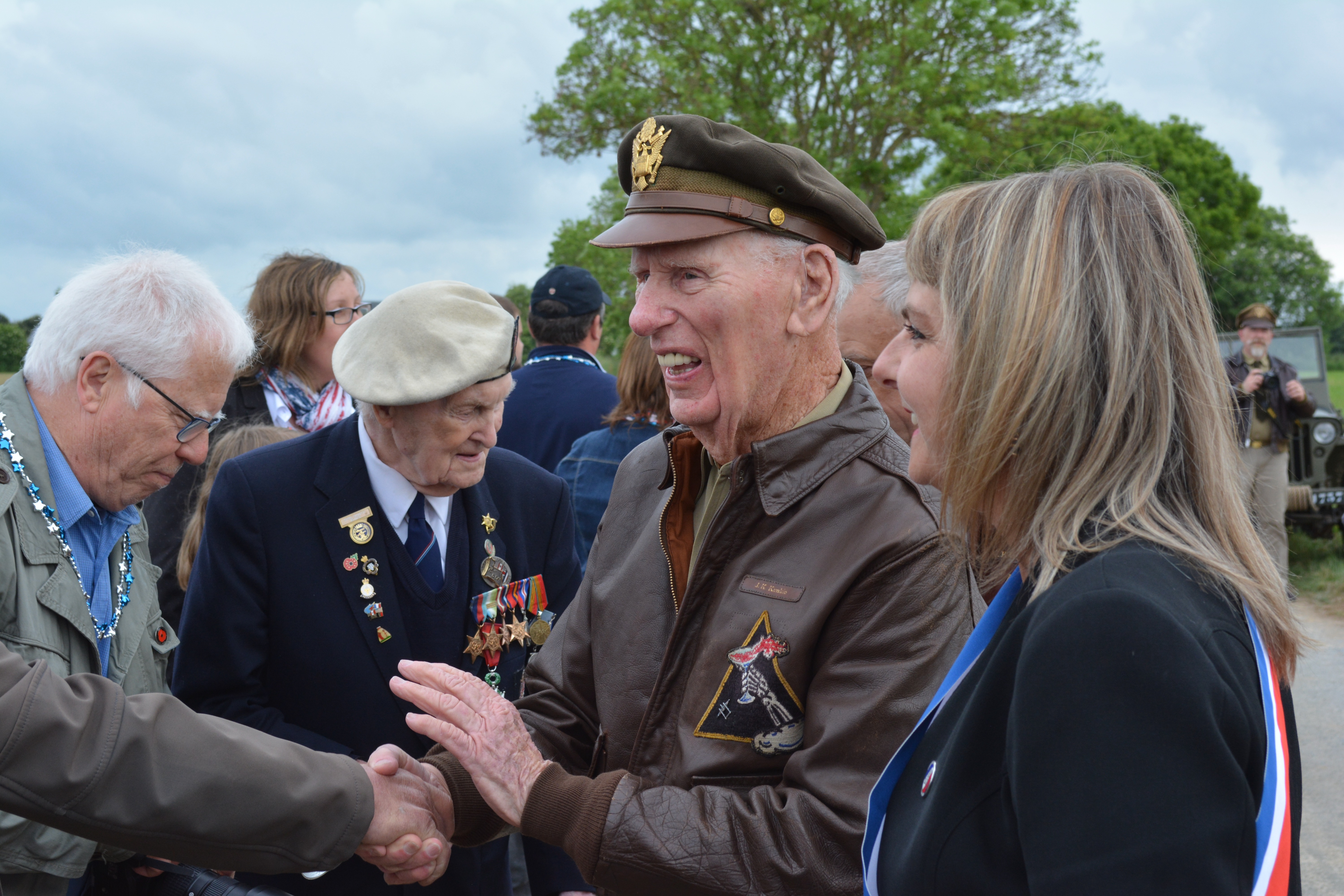
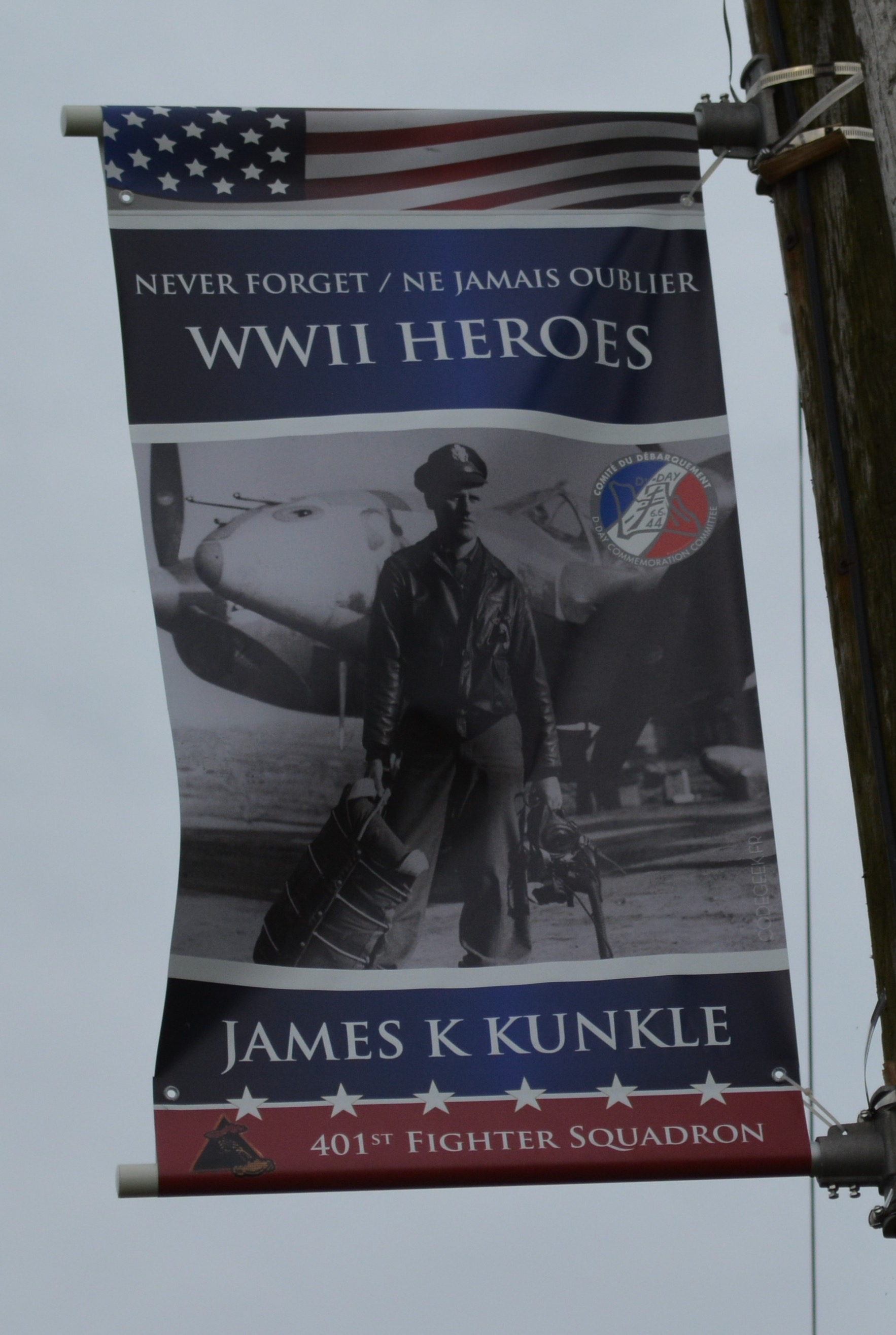
![]() Jim's Bio (Written by Jim Gabel, a close friend)
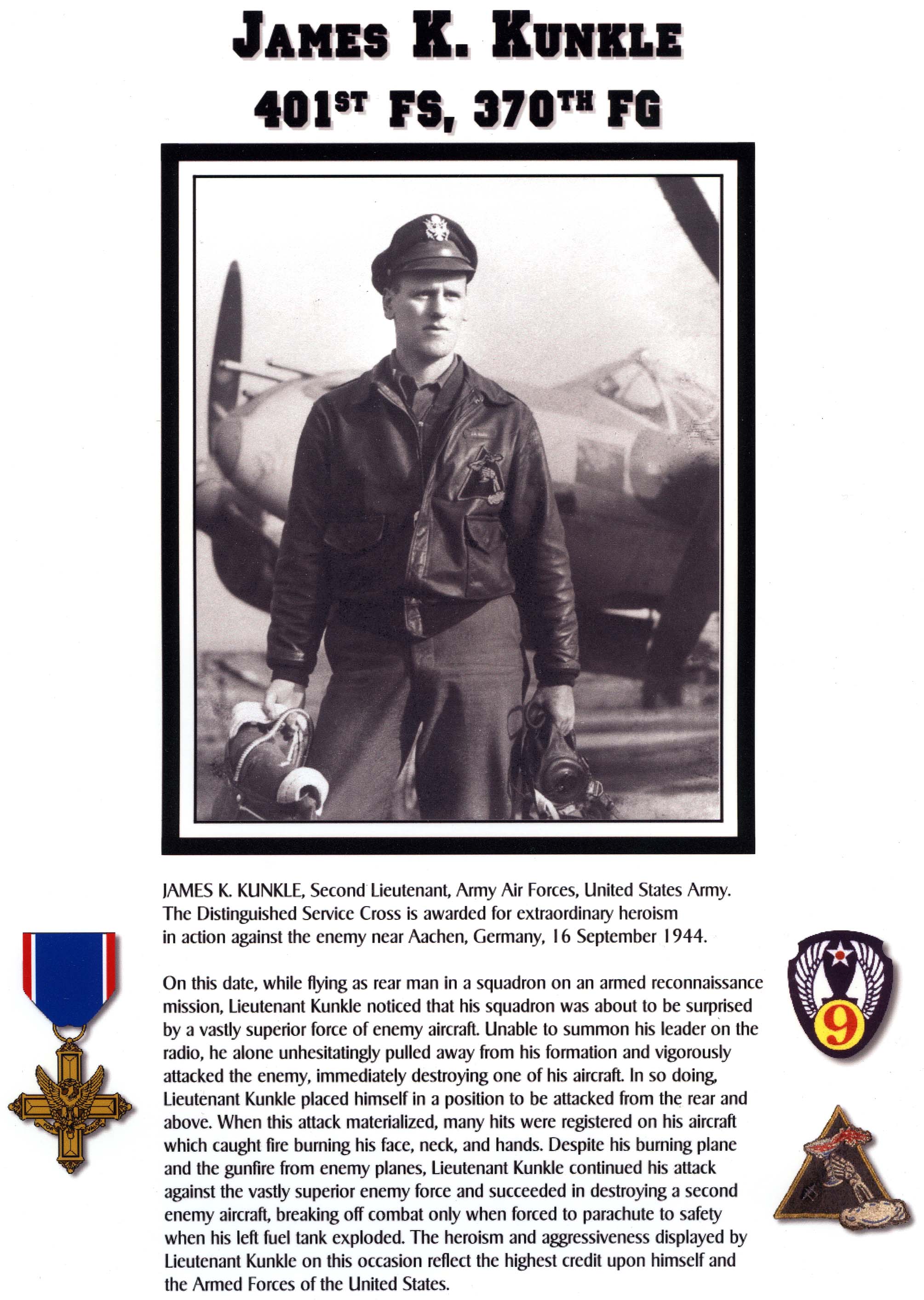
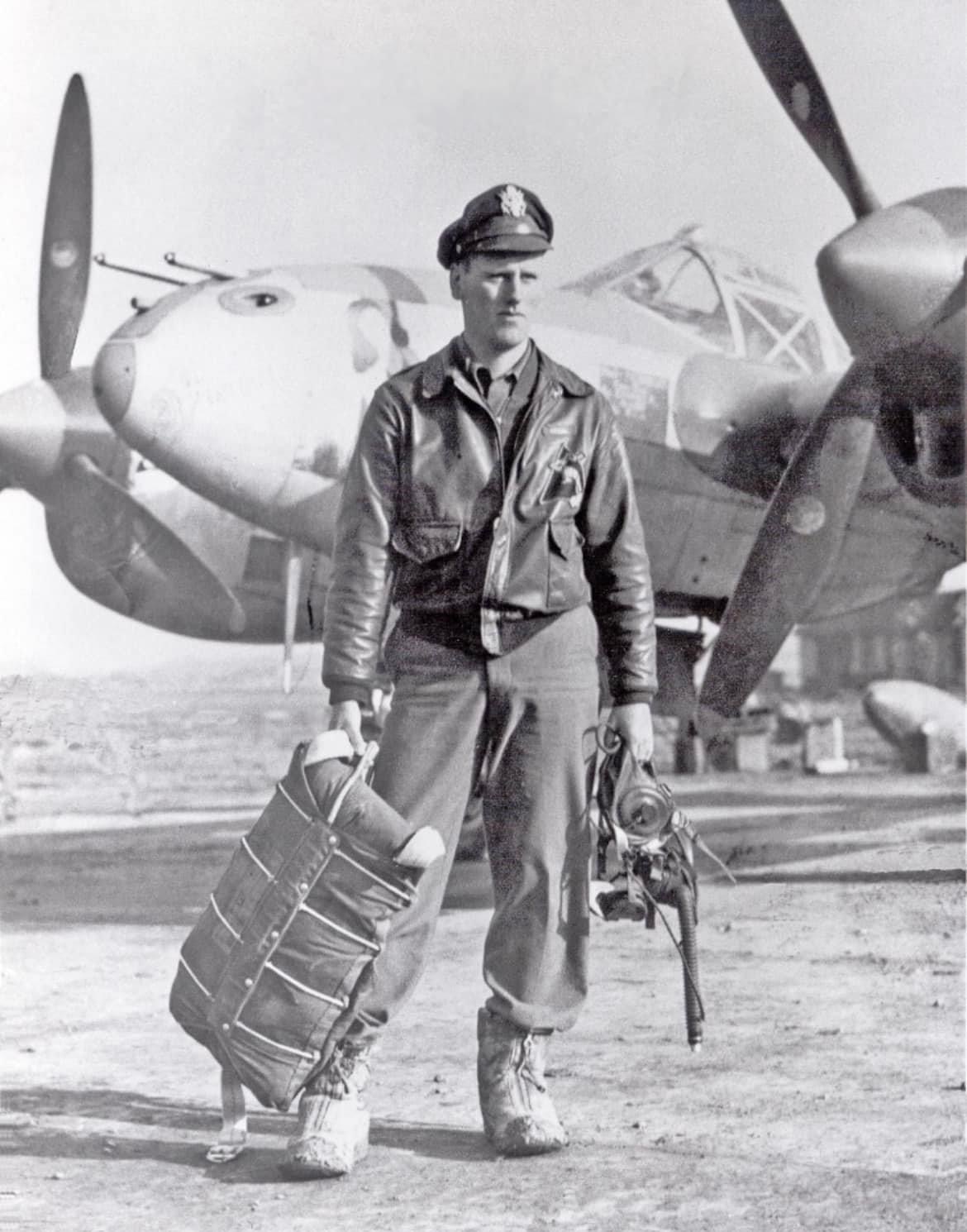
Jim's Bio (Written by Jim Gabel, a close friend)On Sept. 16, 1944, Kunkle was involved in a dogfight with German Luftwaffe over Aachen,
Germany. The rule, according to Kunkle, was that whoever in the formation spotted enemy
aircraft led the engagement. But his fellow airman apparently didn’t hear the radio messages,
and he was on his own. A German fighter pilot strafed Kunkle’s wing leading up to the fuel tank
and something happened, presumably an explosion, but he can’t remember what exactly. “My
next memory was that I was falling through a cloud,” Kunkle said. Jim waited until the
last second to pull the ripcord, so he wasn’t suspended long enough for the Nazis to shoot him
down while in the parachute. He glided into what he remembers was a courtyard with a red brick
building, becoming tangled in a tree.
At the time, the U.S. Army was in the process of retaking Aachen. Believing he was still in
enemy territory, Kunkle immediately pulled and attempted to cock his M1911 .45-caliber pistol
but dropped it. His hands were badly burned, and he broke his back on the way down. He was
eventually rescued by soldiers from the Army’s 1st Infantry Division, who saw the entire fight
from below. Kunkle learned that his dogfight lasted roughly six minutes. The soldiers’
eyewitness accounts are what eventually helped Kunkle earn the Distinguished Service Cross,
the second highest medal for valor. Officially, Kunkle said, he was credited with shooting down
two aircraft, “probably” shooting down two more and damaging another.
Kunkle was sent to a hospital to recover from burns to his hands, face and neck. He was sent
back with this outfit to fly, but the flight surgeon wouldn’t allow it due to Kunkle’s broken back.
But that didn’t stop Kunkle. He still wanted to fly. He was sent back to the states but withheld his
medical records and re-took a flight physical. Kunkle was sent to a base in Portland, Oregon,
where he was a flight maintenance officer.
After the war, Kunkle flew back to Germany with the 357th Fighter Group putting “blips on Uncle
Joe Stalin’s radar.” Jim Kunkle stayed on with the Air Force after it split with the Army in 1947
and was a jet aircraft pioneer. He ran the first dive-bombing tests on the P-84 Thunder jet. He
was discharged from active duty in 1948 but stayed 10 years in the reserves.
After the war, Jim pursued a successful civilian career, first as an executive with Paper
Products, Inc., then as a builder in the Hollywood Hills.
Aviation eventually called him back once more, and he spent many years in aircraft sales and in
the planning and development of airport facilities throughout the U.S. and Guam.
Jim never lost his connection to the skies. He received an invitation from Paul Allen (the late
billionaire who co-founded Microsoft and aviation enthusiast) to inspect a restored P-51 that
Kunkle once flew to Sweden. He continued to fly well into his 90s, and until just months before
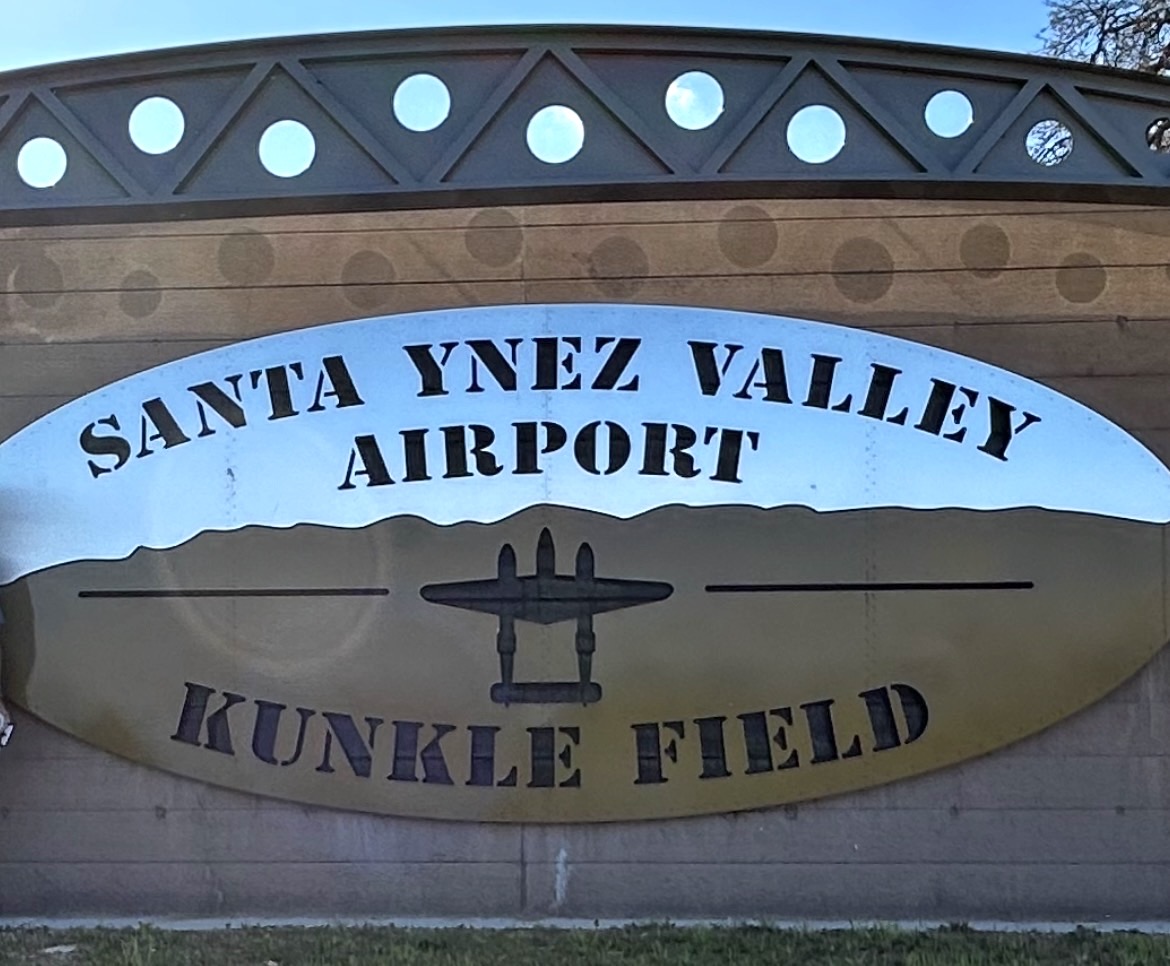
his passing, he continued to visit his hangar at Santa Ynez Airport, nearly every day. Santa
Ynez’s airports new name was unveiled at Jim Kunkle’s 100th birthday event, Kunkle Field.
![]()
![]()
![]()
![]()
![]()


.jpeg)